


Koytendag Mountain & Dinosaur plateau


About tour
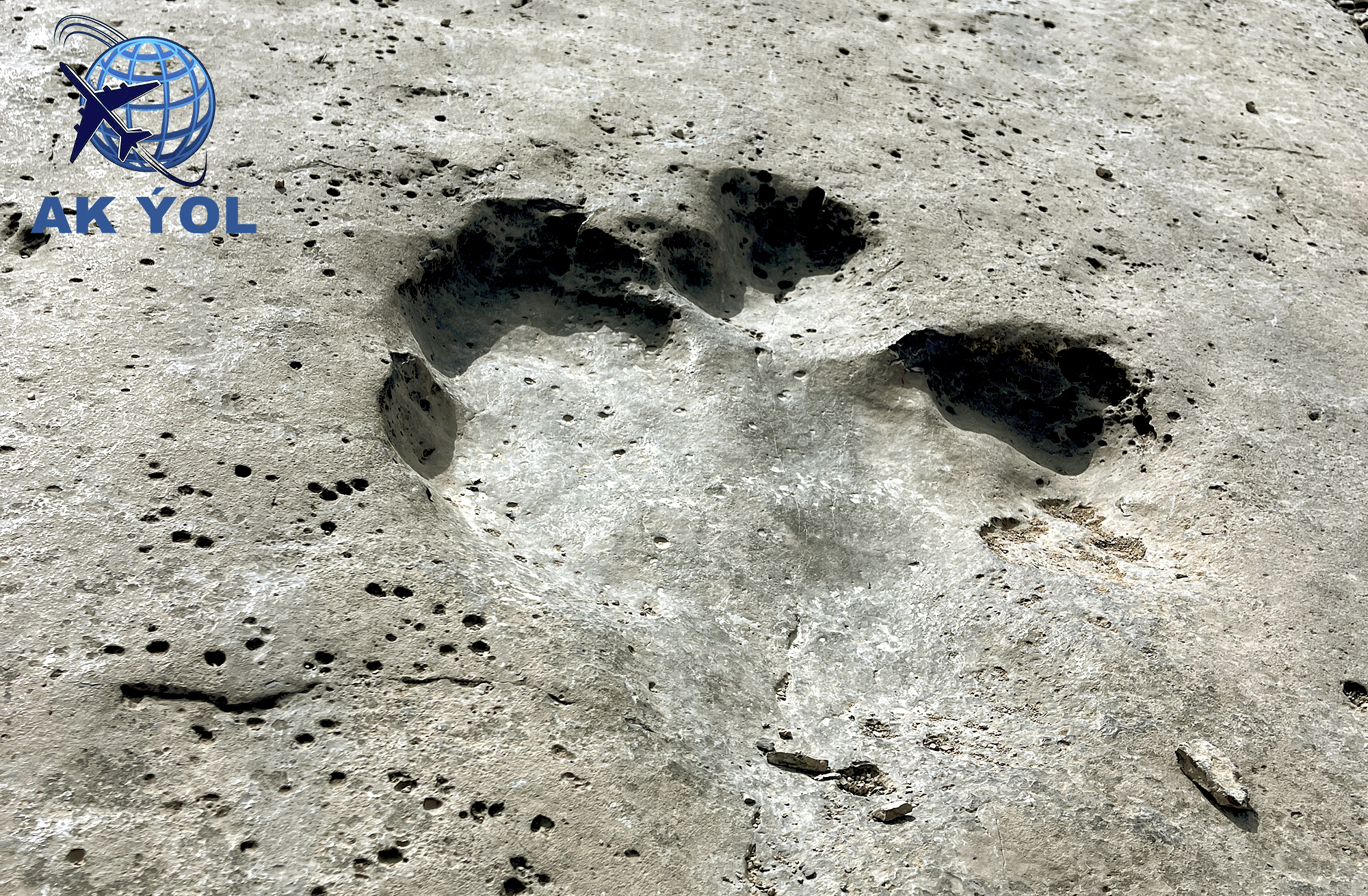
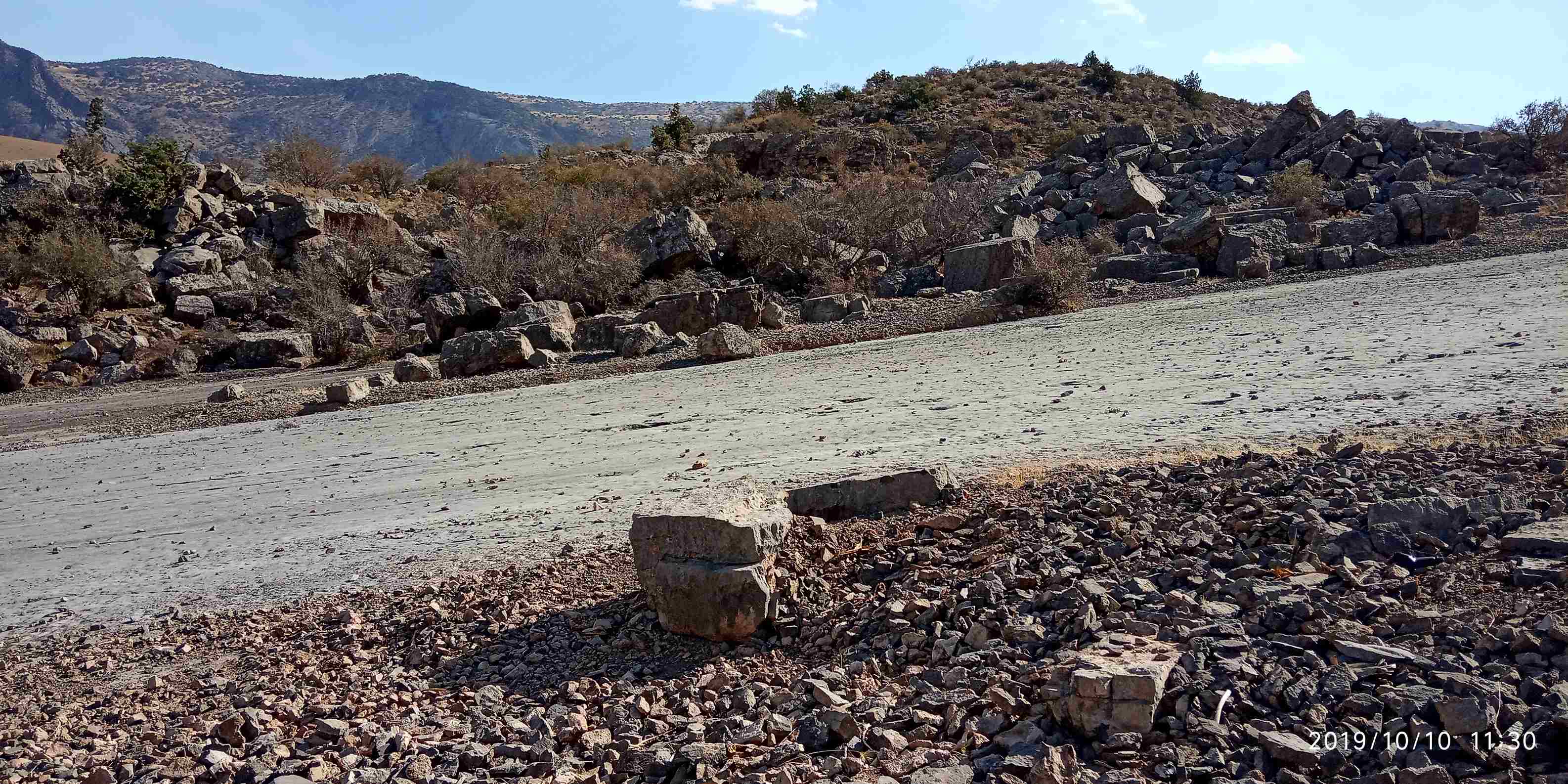
The Koytendag State Nature Reserve was founded in November, 1986, and is situated on the western slopes of the Koytendag Mountains, a spur of the Gissar range of the great Pamir-Alay mountain system. The Koytendag region is located close to the border with Uzbekistan in the east of Turkmenistan. In this area one can see the Koytendag mountains, and peak Ayry Baba, the highest point in Turkmenistan at 3,137 m above sea level; the grandiose "Umbar Dere" canyon, with 28 m waterfalls; the plateau of Dinosaurs, with 438 fossilized Dinosaur footprints; the unique, hydrogen sulphate hot spring, "Gainar Baba"; "Kyrk gyz" canyon; and karst caves.
Itinerary
-
Arrival to Ashgabat international airport in the early morning at by Turkish Airlines.
Tour guide will meet you with “Ak yol travel” signboard at meeting area and transfer to the hotel.
Upon arrival check in and overnight at the hotel. Rest time.
Ashgabat is a relatively young city in 25.05.2013 city was included Gunnies Book of records as a white marbled city on the world.
10:00 – Ashgabat sightseeing:
Independence Park if you once find yourself in Ashgabat, the city of love, white marble and thousands of fountains, you must visit the main park in the Turkmen capital - National Independence Park. This Park is one of the city’s attractions, embodying the spirit of modern Turkmenistan.
Arch of Neutrality used to stand on the main square of the country, but in 2011, was moved to Ashgabat’s outskirts. Still worth a visit, this multi-level structure is crowned by a sculpture of the former Turkmenistan´s President, Saparmurat Niyazov. Previously, the sculpture used to rotate after the sun, making a daily full turnover.
The Hotel “Bagt Koshgi” that from Turkmen language means “The temple of Happiness” is a part of a Wedding Palace with the same name located in 5 km from the centre of Ashgabat. This unique building of an unusual shape was opened in 2011 and besides the hotel includes six luxurious halls for marriage registrations, seven banquet halls, numerous shops and other different facilities necessary for wedding arrangement such as beauty salons, wedding dress boutiques, photo booths, and many others. “Bagt Koshgi “complex is an 11-storey building consisting of solid foundation on which a cube with octagonal sides stands, and this unusual figure can hold inside a huge ball with a diameter of 32 meters.
The Ferris Wheel in Ashgabat, known as the Giant Wheel, is an iconic landmark that complements the city’s modern skyline. From a height of about 40 metres, it offers a stunning panoramic view of Ashgabat and the surrounding landscape. Located in the heart of the city centre, the Ferris wheel is part of the large ‘Independence Park’, which features beautifully landscaped gardens, fountains and various recreational facilities. The giant wheel is particularly enchanting at night when it is lit up with multi-coloured lights, creating a vibrant atmosphere. It is an ideal place for families, couples and anyone who wants to admire the breathtaking views of Ashgabat, especially at sunset. This attraction symbolizes the rapid development of Turkmenistan‘s capital city and its desire for modernity, and provides a fun and enjoyable experience for all ages.
The Constitution Monument, in Ashgabat, stands as a symbol of the nation’s commitment to democracy and the rule of law. Unveiled in 2011, the monument celebrates the significance of the Constitution of Turkmenistan, which was adopted in 1992.Design and Features of the monument features a grand architectural design, characterized by its towering structure that represents the ideals of freedom and governance. The central element of the monument is a large, open book symbolizing the Constitution itself, with the text inscribed on its pages. Surrounding the monument are beautifully landscaped gardens, enhancing the monument’s prominence and serving as a peaceful gathering place for citizens and visitors.
Ertugrul Gazi Mosque is one of the most beautiful Muslim mosques of Turkmenistan. Like any other buildings, erected in Ashgabat during the period of independence, the mosque strikes with its size and rich decoration.
The State Museum of the State Cultural Center of Turkmenistan is the first and largest one of the 26 museums established following the independence of Turkmenistan. The official opening took place on 12 November 1998. It is located on Archabil Avenue in the picturesque Kopet Dagh foothills. Opposite the museum there is the main flag of Turkmenistan attached to one of the highest flagpole in the world.
Night at the hotel.
-
BREAKFAST
Transfer to Ashgabat Airport
10:00 - Flight to Kerki
11:00 - Arrival in Kerki
Upon arrival in Kerki, then drive to Koyten village. On the way visit:
Kaynar Baba in the very south of Turkmenistan, in the Karlyuk steppe, soaked with hot air and salt, there is one of the country’s most unusual lakes – the Kaynar Baba.The lake is quite small in size – only 25 m in diameter. The water here is crystal clear and its bottom, besprent with small stones, seems very shallow. Its water is fresh, so the Kaynar Baba is the only source of drinking water for miles around. Another surprising and strange feature of the spring is the presence of fish in it, despite the lack of connection with rivers or other bodies of water.
Upon arrival in Koyten village.
Night at the camp
-
BREAKFAST
09:00 - we will start tour. Visits:
The Koytendag State Nature Reserve was founded in November, 1986, and is situated on the western slopes of the Koytendag Mountains, a spur of the Gissar range of the great Pamir-Alay mountain system. The Koytendag region is located close to the border with Uzbekistan in the east of Turkmenistan. In this area one can see the Koytendag mountains, and peak Ayry Baba, the highest point in Turkmenistan at 3,137 m above sea level; the grandiose "Umbar Dere" canyon, with 28 m waterfalls; the plateau of Dinosaurs, with 438 fossilized Dinosaur footprints; the unique, hydrogen sulphate hot spring, "Gainar Baba"; "Kyrk gyz" canyon; and karst caves.
Dinosaur plateau in the far eastern reaches of Turkmenistan, nestled within the Kugitangtau (Koytendag) mountains at an elevation of 1,500 meters, lies one of the most extraordinary natural wonders: the Dinosaur Plateau. This remarkable site, a vast limestone slab perched on a hillside, is accessible via a half-hour trek from the small village of Khodjapil.
Umbar Dere one of the most unique natural beauties of Koytendag is its narrow valleys and long, rocky streams. Koytendag is home to several such streams, including “Umbar Dere. In a remote part of Khojapil lies the picturesque Umbar-Dere Gorge, at the end of which is the 27-meter Umbar Waterfall, fed by the melting snows of the Kugitang Mountains.
“Kyrk Gyz” could be included in the “golden ring” of the mountain village of Khojapil, along with the beautiful Umbar-Depe canyon and the unique plateau with dinosaur footprints. The “Forty Girls” canyon itself does not differ much from the neighboring canyons that cut through the Koytendag range. However, the vertical walls of the rocks feature many deep niches formed by karst processes.
Night at the camp
-
BREAKFAST
Transfer to Amyderya Railway station
12:00 - Departure to Mary
22:10 - Arrival in Mary Railway station
Upon arrival and transfer to hotel
Night at the hotel
-
BREAKFAST,
09:00 – visit the historical sites of ancient Merv. Located from Mary city 30 km.
Soltan Sanjar Mausoleum most majestic architectural monument of Merv is Sultan Sanjar mausoleum called "Dar-al-Akhir" ("Otherworld"). His whole appearance it represents the highest achievements and flourishing Seljuk power. Sultan Sanjar Mausoleum is located in the center of the settlement Sultan Kala. Nearby are large monumental buildings - the palaces of Seljuk rulers and a mosque.
Great and Less Kiz fortress small fortresses with corrugated, if folded in the crease, napodobye accordion, walls. They put on the earthen ramps with mild slope. Small windows are hidden in the folds of the walls. At the top of the wall terminate toothed battlements, which are almost did not survive.
Gyaur Kala fortress In Turkic languages, "Gyaur" means "infidel", referring to those who do not practise Islam. The name of the fortress in ancient Merv, Gyaur-Kala - "Fortress of the Infidels" - was given by the Arabs who conquered it in the early 8th century. However, the fortress itself dates back much earlier, to the 4th-3rd centuries BC.
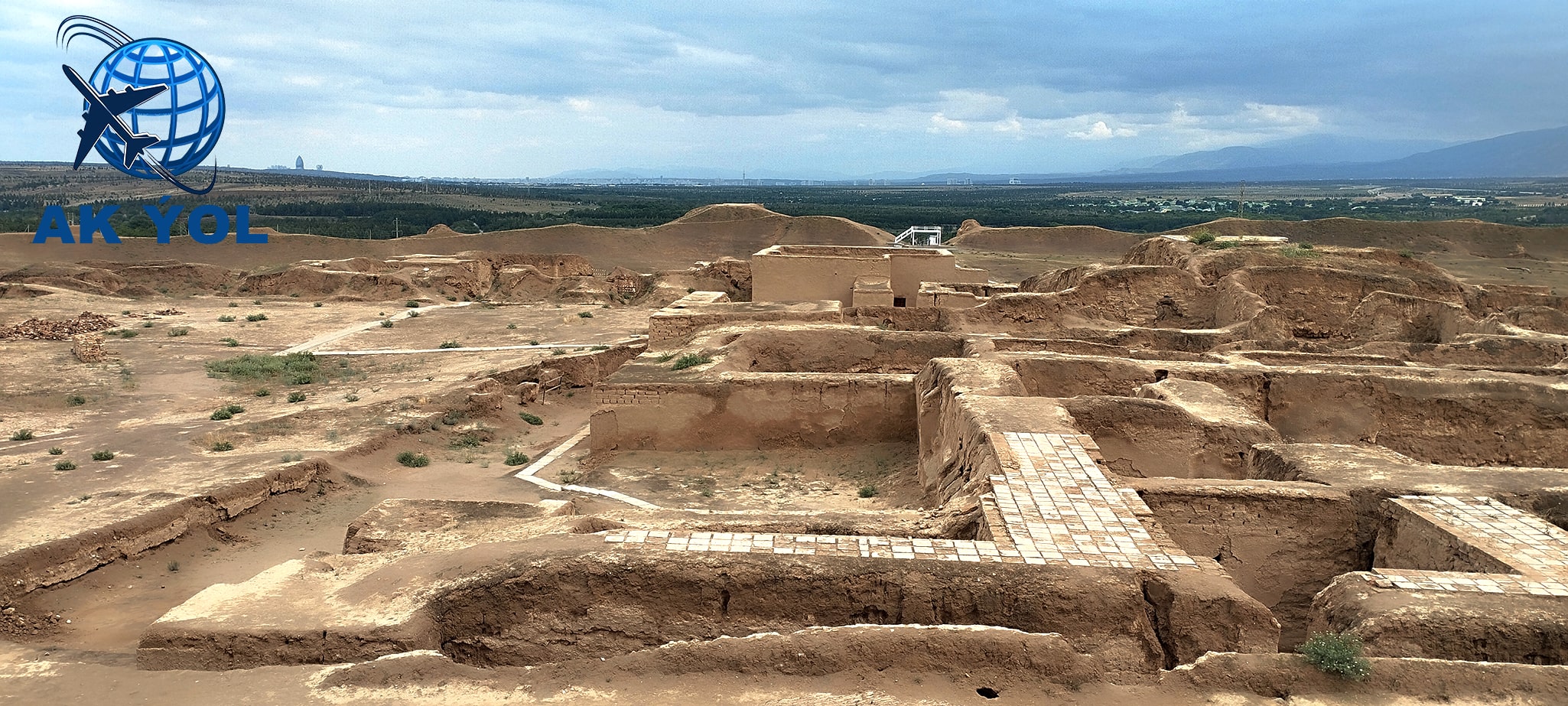
Erk-Kala fortress was the center of ancient Merv. The fortifications of Erk-Kala have sagged under earth drifts but nevertheless, have preserved their height and power. This distinguishes Erk-Kala from other fortresses. Now the height of the fortifications with steep slopes and precisely cut out towers reaches 25 - 29 m.
Yusuf Khamadany Mosque this complex was built on the burial site of Abu-Yakub Yusuf ibn Ayub born in the city of Hamadan (western Iran). Above his tomb the mausoleum, which has not survived, was erected. The destroyed structure was partially restored and reconstructed in the 19th century. The tomb of the dervish symbolizes a crypt from black marble decorated with a floral ornament and inscriptions. There is a chapel in the western corner of the mausoleum with central aivan. It is the basic part of the complex. Today Yusuf Khamadani mosque is an important Muslim temple, the place of worshipping.
Sultan Kala fortress in the 11th-12th centuries Merv became the capital of Great Seljuk state and reached the highest prosperity. By the order of Seljuk sultan Melik-shakh the city was surrounded by a fortification and moat.This fortress with the area of over 400 hectares is known as Sultan-Kala - the Fortress of Sultans. In the northeastern part of Sultan-Kala Shakhriar-ark citadel with palace complexes of sultans, administration buildings and a military barracks - was constructed.
Mohammed ibn-Zeid Mausoleum is an outstanding monument of Sultan-Kala. It is relatively small but arouses admiration by its original architectural solution. The interior of the mausoleum has a unique wall inscription in Arabian language. The letters skillfully carved from burnt bricks boldly stand out on the background of the vegetative pattern made of plaster. It’s says that the mausoleum erected above the tomb of Mohammed ibn - Zeid, the representative of Shiit branch of Islam, the descendant of caliph Ali in the fifth generation in 1112-1113.
History, Flora and Fauna of Mary Region in the Mary History Museum The Mary History Museum was established as the Mary Museum of History and Revolution in 1968. Its first exposition opened in 1974. When Turkmenistan gained independence, the Museum in 2008 moved into a new white-marbled building in the center of Mary.
If have time short walking tour within the central part of Mary City which has The Regional Mosque of Mary Province, The Central Theater of Mary, The Convention & Conference Center “Ruhiyet Koshgi”, Central Park & Monument of Mollanepes-the National Classic Poet who lived in Mary in XVIII-XIXcc.
Transfer to Mary Railway station
22:30 - Departure to Ashgabat
06:05 - Arrival in Ashgabat Railway station next morning
Night on the board
-
06:05 -arrival in Ashgabat Railway station. Local restaurant breakfast.
08:00 - you will start journey:
Nisa Fortress, located near Ashgabat in Turkmenistan, is a UNESCO World Heritage Site renowned for its historical significance and architectural grandeur. The site comprises the ruins of two ancient fortresses, Nisa and Old Nisa, which were pivotal in the region during the Parthian Empire (247 BC – 224 AD). Nisa was a prominent center for the Parthian dynasty, serving as a royal residence and a key military stronghold. The site is believed to have been established in the 3rd century BC and showcases a blend of Persian and Hellenistic architectural styles, reflecting the cultural exchanges of the time. It was also an important hub for trade along the Great Silk Road, linking East and West.
Turkmenbashi Ruhy Mosque (also known as the Gypjak Mosque) is one of the largest mosques in Central Asia, located in Gypjak, a village near Ashgabat, the capital of Turkmenistan. It was commissioned by Saparmurat Niyazov, the first president of Turkmenistan. The mosque covers an area of 18,000 square meters and can accommodate around 10,000 worshippers at a time. Its central dome reaches a height of 55 meters, while the minarets are 91 meters tall, representing the year 1991, when Turkmenistan gained independence from the Soviet Union. Design built primarily from white marble, which is commonly used in Ashgabat, the mosque reflects a blend of traditional Islamic and Turkmen styles. The interior is adorned with intricate patterns, including calligraphy from the Quran.
Akhalteke Horse Farm the horse farm is located in the countryside area, behind the Geokdepe town, 55km. Excursion at the farm to see the AkhalTeke horse and Turkmen dog Alabay. Akhal-Teke horse farm – home to the world-famous Turkmen horses. Learn about the breeding traditions and history of Akhal-Teke horses. Here, experts will tell you about Akhal-Teke horses. Next to the farm, you can take a horseback ride through the gardens.
Gokdepe Mosque is a significant religious and historical landmark located in Gokdepe. Built in the 1990s, it is sometimes referred to as the Saparmyrat Haji Mosque in honour of his pilgrimage to Mecca.The mosque is an impressive architectural work, combining elements of modern Islamic design with traditional Central Asian styles. Its white marble facade reflects Turkmenistan’s national preference for this material, which can be seen in many of the country’s modern structures. The mosque is adorned with four minarets, tall and slender, framing a central dome that rises prominently above the building. The dome itself is striking, often described as sparkling turquoise or blue, which is a testament to the mosque’s name ‘Gokdepe’, which means ‘blue hill’ in Turkmen.
Kowata (Kow-Ata) is a natural underground lake located within the Kow-Ata Cave in Turkmenistan, known for its warm, sulfur-rich waters that are reputed to have therapeutic qualities. It lies about 90 kilometers (55 miles) west of Ashgabat, and is a popular destination for locals and tourists alike. The water in Kowata remains warm year-round at a consistent temperature of about 35-37°C (95-98°F). The lake is rich in minerals like sulfur, which gives the water a slight medicinal odor, believed to help treat certain skin and respiratory conditions.
Nohur (also known as Nokhur or Nokur) is a remote and picturesque village located in the Kopet Dag Mountains of southern Turkmenistan, near the border with Iran. Known for its stunning natural beauty and unique cultural traditions, Nohur offers a glimpse into a way of life that has remained largely untouched by modernity. The village is nestled in a deep valley surrounded by rugged mountains, providing breathtaking views of dramatic cliffs, lush greenery, and terraced landscapes. Traditional stone houses with flat roofs and wooden beams characterize the architecture of Nohur, blending harmoniously into the surrounding environment. Narrow streets wind through the village, giving it a timeless and serene atmosphere.
Night at the hotel.
-
Transfer to the Ashgabat International airport for flight to next destination.
We hope you enjoyed our service and hope you'll come back again.
Included
- Accommodation in mentioned hotels on DBL/TWIN sharing
- Breakfasts at the hotels
- Services of A/C comfortable transport with professional driver as per the program
- English,Spanish,Italian,German,French,Russian and Chinese speaking guides
- Domestic air ticket: Ashgabat-Kerki
- Train tickets: Amyderya-Mary, Mary-Ashgabat
- Daily 5 bottles of 0.5l water per person
- Entrance fees to mentioned sights per program (excluding photo and video charges at sights)
- Visa support to Turkmenistan, registration and travel pass
- Travel tax
- Handmade souvenir per person
Excluded
- Visa consular fees and processing expenses 80-100 USD per person, when obtained at land border (subject to change, nationality dependent)
- Turkmenistan migration tax 14 USD per person
- PCR nose test 33 USD (subject to change)
- Photo and video charges at sights
- An early check-in hotel
- Lunches and dinners
- Beverages
- International air tickets to / out of Ashgabat
- Travel Insurance
- Extras, not indicated in inclusions
Additional info
NOTE:
Check-in after 14:00, check-out before 12:00
If the traveler stays more than 3 working days in Turkmenistan, the travel agency will register and stamp your passport on a local Tourist Board
An express PCR test for Covid-19 will be taken upon arrival. It costs 33 USD (subject to change)
Breakfast box in case of very early morning departures
Customer Support
We have a professional customer support team and always accompany you on every trip.