



Discover Central Asia,5 Stans Tour
.jpg)
About tour
Welcome to an adventure that goes beyond the conventional, where centuries-old stories and cultural wonders await you at every turn. Ak Yol Travel invites you to embark on our tour of the legendary Great Silk Road. Imagine through vibrant cities and exotic markets, where every alley breathes stories of trade that shaped our world. Our carefully planned expedition takes you through five fascinating countries, Turkmenistan, Uzbekistan, Tajikistan, Kyrgyzstan and Kazakhstan, each boasting a mosaic of cultures, traditions and landscapes. Prepare yourself for an experience that will enrich your soul, expand your understanding, and create memories that will last forever. It's time to discover the Great Silk Road with Ak Yol Travel - where every step is a story and every destination a hidden treasure.
Itinerary
-
Tourists will be welcomed at the international airport at any time during the day and then be transferred to their hotel.
Almaty is the largest city and former capital of Kazakhstan.
It is an important cultural, economic, and historical center of the country, known for its cosmopolitan atmosphere and stunning natural surroundings.
-
BREAKFAST
09:00-we will start tour:
The Almaty Green Bazaar is one of the largest and most vibrant markets in Almaty. It is known for its wide variety of fresh produce, spices, and traditional Kazakh goods.
Panfilov Park (30 min) Panfilov Park is a public park located in the heart of Almaty. It is home to several important historical landmarks, including the Zenkov Cathedral and the Memorial of Glory and Eternal Flame. Zenkov Cathedral (40 min) The Zenkov Cathedral is a historic Russian Orthodox cathedral located in Panfilov Park. It was built in the early 20th century and is known for its unique wooden construction Memorial of Glory and Eternal Flame (30 min) The Memorial of Glory and Eternal Flame is a monument located in Panfilov Park, dedicated to the fallen soldiers of Kazakhstan during World War II.
Kok-Tobe (1 h) Kok-Tobe is a hill and recreation area located on the outskirts of Almaty. It features stunning views of the city and is home to several diverse attractions, including an amusement park, restaurants, and the Kok-Tobe Tower.
Lunch time (1 h) Lunch includes courses from national cuisine as a standard option (see the "Special Notes"), however, guests can order other courses at an extra charge Almaty Medeo (1 h 10 min)
The Almaty Medeo is a high-altitude sports complex located in the mountains above Almaty. It is known for its ice-skating rink, which is one of the highest in the world Shymbulak (2 h 20 min). Shymbulak is a mountain resort located in the Tian Shan mountains above Almaty. It is a popular destination for winter sports enthusiasts, with skiing and snowboarding being the most popular activities.
Night at the hotel
-
BREAKFAST
Transfer to Almaty airport and check-in (3 h)
At 07:00 – Transfer to the Almaty international airport and check-in Flight to Tashkent (1 h 30 min) At 10:45 – Flight to Tashkent (Uzbekistan Airways, HY-762).
Lunch time (1 h 10 min) Lunch includes courses from national cuisine as a standard option (see the "Special Notes"), however, guests can order other courses at an extra charge.
Minor white Mosque (30 min) Minor white Mosque is a historic mosque located in the city of Tashkent, Uzbekistan. It was built in the 19th century and is known for its unique architectural style and intricate tilework.
Independence Square (40 min) Independence Square is a public square located in the center of Tashkent, Uzbekistan. It was built to commemorate Uzbekistan's independence from the Soviet Union and features several important monuments and landmarks, including the Independence Monument and the Uzbekistan Hotel.
Amir Timur Square (50 min) Amir Timur Square is a public square located in the heart of Tashkent, Uzbekistan. It is named after the famous Central Asian conqueror Amir Timur and features a large statue of him on horseback. The square is surrounded by several important landmarks, including the Tashkent Chimes and the Tashkent Museum of History.
Night at the hotel
-
BREAKFAST
Transfer to train station (2 h)
At 07:00 – Transfer to Tashkent train station Train to Bukhara (4 h 10 min) 08:50 – Train to Bukhara, Speed Train Afrosiyob.
Lunch time (1 h) Lunch includes courses from national cuisine as a standard option (see the "Special Notes"), however, guests can order other courses at an extra charge.
Ismail Samani Mausoleum (30 min) Ismail Samani Mausoleum is a historic mausoleum located in Samarkand. It dates back to the 10th century and is considered a masterpiece of Islamic architecture. The mausoleum is made of fired bricks and features intricately decorated domes and facades.
Chashma Ayub Mausoleum (20 min) Chashma Ayub Mausoleum is another historic mausoleum located in Samarkand. It is believed to have been built over a sacred spring and features beautiful marble tilework and unique architecture.
Boloi Hhauz Mosque (30 min) Boloi Hhauz Mosque is a historic mosque in Bukhara, Uzbekistan. It was built in the 18th century and is known for its beautiful wooden columns and ornate design.
Ark Citadel (40 min) Ark Citadel is an ancient fortress located in Bukhara that dates back to the 5th century. It was once the residence of the Bukharan emirs and today serves as a museum and tourist attraction.
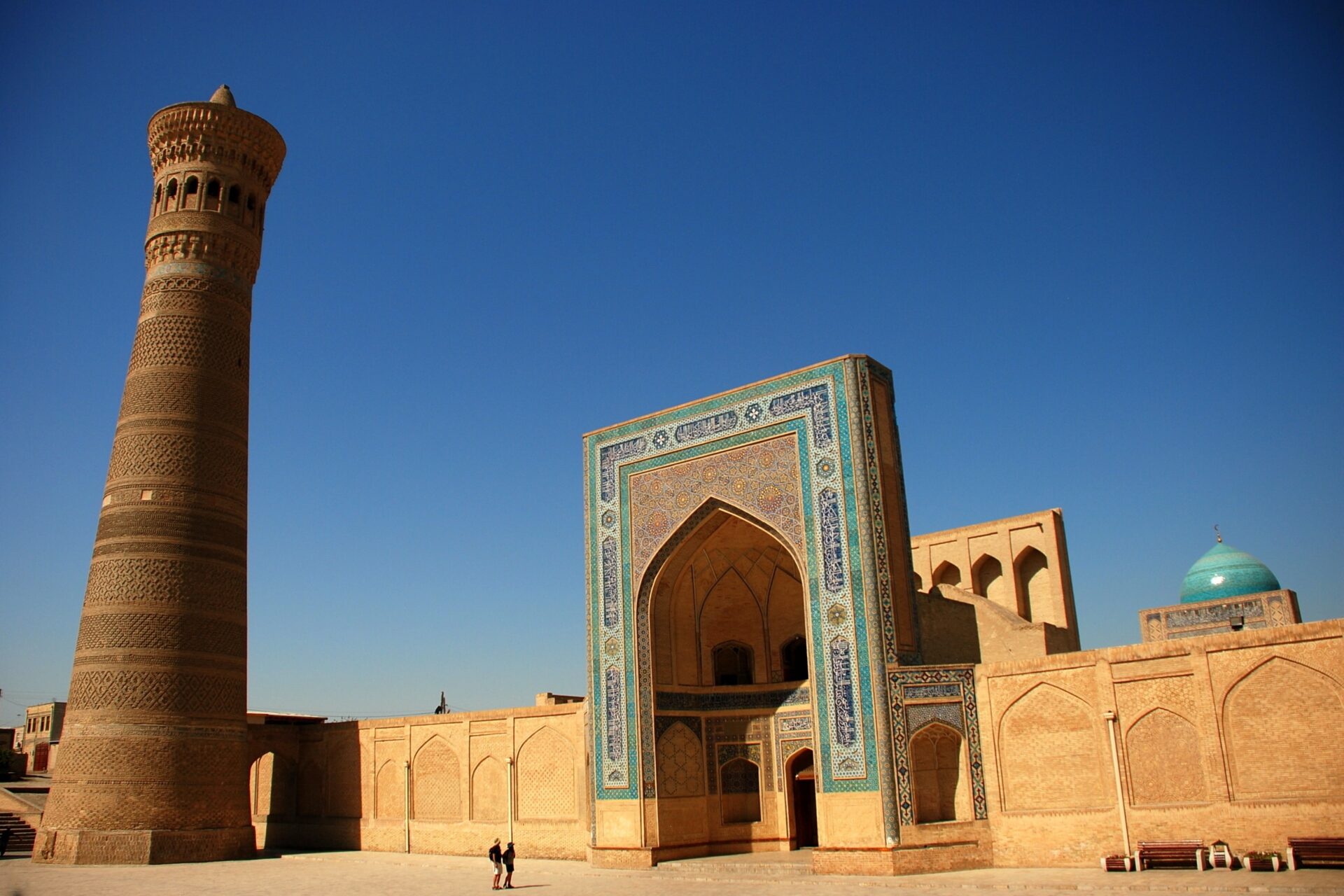
Poi-Kalyan Complex (30 min) Poi-Kalyan Complex is a historic complex of Islamic buildings located in Bukhara. It includes several important architectural landmarks, including the Kalyan Minaret, the Kalyan Mosque, and the Miri Arab Madrasah.
Ulugbek Madrasah (30 min) Ulugbek Madrasah is a historic Islamic school located in Samarkand. It was built in the 15th century and features unique architectural features, including intricate tilework and carvings. Abdulaziz-Khan Madrasah is another historic Islamic school located in Bukhara. It was built in the 17th century and features unique tilework and detailed carvings.
Night at the hotel
-
BREAKFAST
Departure to Mary, Turkmenistan (1 h 30 min)
08:00 – After breakfast departure to Mary, Turkmenistan (472 km, ~9-hour drive). In ~1.3 hours we will arrive at the border Farab/Alat. Border passing formalities and meeting with Turkmenistan tour guide.
Way to Mary (5 h) Drive ~300km & 5 hours direct driving to Mary via Turkmenabat and the Floating Bridge lasting ~900 meters over the Greatest River of Central Asia from where is visible nearby the Oldest Railway Bridge in this part of Central Asia built at the end of XIX century over that “mad” river which till 2009 was the only one connecting south with north. In route stop at some typical dunes of Karakum Desert to enjoy with photos.
Lunch on way (1 h) Lunch includes courses from national cuisine as a standard option (see the "Special Notes"), however, guests can order other courses at an extra charge.
Soltan Sanjar Mausoleum (30 min) Soltan Sanjar Mausoleum most majestic architectural monument of Merv is Sultan Sanjar mausoleum called "Dar-al-Akhir" ("Otherworld"). His whole appearance it represents the highest achievements and flourishing Seljuk power. Sultan Sanjar Mausoleum is located in the center of the settlement Sultan Kala. Nearby are large monumental buildings - the palaces of Seljuk rulers and a mosque.
Great and Less Kiz fortress (20 min) Great and Less Kiz fortress small fortresses with corrugated, if folded in the crease, napodobye accordion, walls. They put on the earthen ramps with mild slope. Small windows are hidden in the folds of the walls. At the top of the wall terminate toothed battlements, which are almost did not survive.
Gyaur Kala fortress (30 min) Gyaur Kala fortress, "Gyaur" means "infidel", referring to those who do not practise Islam. The name of the fortress in ancient Merv, Gyaur-Kala - "Fortress of the Infidels" - was given by the Arabs who conquered it in the early 8th century. However, the fortress itself dates back much earlier, to the 4th-3rd centuries BC.
Erk-Kala fortress (20 min) Erk-Kala fortress was the center of ancient Merv. The fortifications of Erk-Kala have sagged under earth drifts but nevertheless, have preserved their height and power. This distinguishes Erk-Kala from other fortresses. Now the height of the fortifications with steep slopes and precisely cut out towers reaches 25 - 29 m.
Sultan Kala fortress (30 min) Sultan Kala fortress in the 11th-12th centuries Merv became the capital of Great Seljuk state and reached the highest prosperity. By the order of Seljuk sultan Melik-shakh the city was surrounded by a fortification and moat.This fortress with the area of over 400 hectares is known as Sultan-Kala - the Fortress of Sultans. In the northeastern part of Sultan-Kala Shakhriar-ark citadel with palace complexes of sultans, administration buildings and a military barracks - was constructed.
Mohammed ibn-Zeid Mausoleum (20 min) Mohammed ibn-Zeid Mausoleum is an outstanding monument of Sultan-Kala. It is relatively small but arouses admiration by its original architectural solution. The interior of the mausoleum has a unique wall inscription in Arabian language. The letters skillfully carved from burnt bricks boldly stand out on the background of the vegetative pattern made of plaster. It’s says that the mausoleum erected above the tomb of Mohammed ibn - Zeid, the representative of Shiit branch of Islam, the descendant of caliph Ali in the fifth generation in 1112-1113.
A short excursion to Merv (optional) (1 h)
Short tour (optional) within the central part of Mary City which has The Regional Mosque of Mary Province, The Central Theater of Mary, The Convention & Conference Center “Ruhiyet Koshgi”, Central Park & Monument of Mollanepes-the National Classic Poet who lived in Mary in XVIII-XIXcc.
Night at the hotel
-
BREAKFAST
Transfer to Mary Airport
08:10 - Flight to Ashgabat
08:50 - Arrival in Ashgabat
Ashgabat sightseeing:
Independence Park if you once find yourself in Ashgabat, the city of love, white marble and thousands of fountains, you must visit the main park in the Turkmen capital - National Independence Park. This Park is one of the city’s attractions, embodying the spirit of modern Turkmenistan.
Arch of Neutrality (30 min) Arch of Neutrality used to stand on the main square of the country, but in 2011, was moved to Ashgabat’s outskirts. Still worth a visit, this multi-level structure is crowned by a sculpture of the former Turkmenistan´s President, Saparmurat Niyazov. Previously, the sculpture used to rotate after the sun, making a daily full turnover.
Ertugrul Gazi Mosque (30 min) Ertugrul Gazi Mosque is one of the most beautiful Muslim mosques of Turkmenistan. Like any other buildings, erected in Ashgabat during the period of independence, the mosque strikes with its size and rich decoration.The mosque was erected in the heart of Ashgabat, in Azadi street in the 90-s of the XX century. That is why this building is also called the Azadi Mosque.
State Museum (50 min) The State Museum of the State Cultural Center of Turkmenistan is the first and largest one of the 26 museums established following the independence of Turkmenistan. The official opening took place on 12 November 1998. It is located on Archabil Avenue in the picturesque Kopet Dagh foothills. Opposite the museum there is the main flag of Turkmenistan attached to one of the highest flagpole in the world.
National Carpet Museum (30 min) The National Carpet Museum in Ashgabat is located in the city center near the State Association of Turkmen Hali. Precisely when and where carpet weaving originated in the world remains a mystery. However, there is clear evidence that handwoven rugs have been produced in Turkmenistan since ancient times.
Lunch time (1 h) Lunch includes courses from national cuisine as a standard option (see the "Special Notes"), however, guests can order other courses at an extra charge,
Akhalteke Horse Farm the horse farm (3 h) Akhalteke Horse Farm the horse farm is located in the countryside area, behind the Geokdepe town, 55km. Excursion at the farm to see the AkhalTeke horse and Turkmen dog Alabay,
Night at the hotel
-
BREAKFAST
09:00 – After breakfast continue sightseeing Ashgabat:
The Turkmenbashi Ruhy Mosque eleven kilometers to the west of Ashgabat there stands one of the largest mosques in Central Asia and main mosque of Turkmenistan – The Turkmenbashi Ruhy Mosque. Like all other buildings of the period of independence it differs with its immensity and grandiosity.
Old and New Nisa (2 h 30 min) Old and New Nisa 18 km from the city of Ashgabat in the outskirts of Bagir village there is a unique ancient monument, the ruins of ancient settlement Nisa. It used to be the capital of Parthia which had existed from the third century B.C. to the third century A.D. The Historical complex includes two archeologic monuments - Old and New Nisa. Lunch time (1 h) Lunch includes courses from national cuisine as a standard option (see the "Special Notes"), however, guests can order other courses at an extra charge.
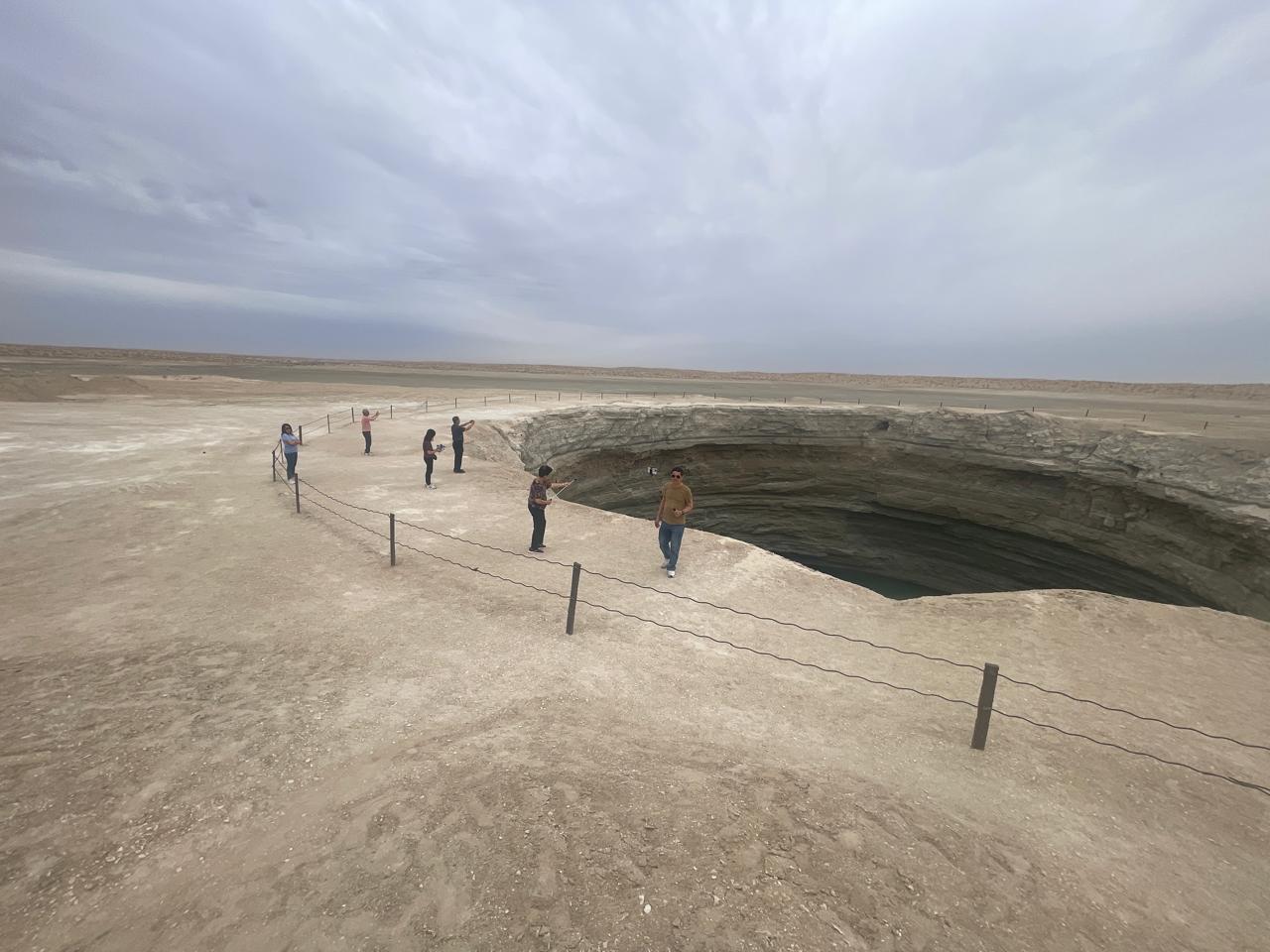
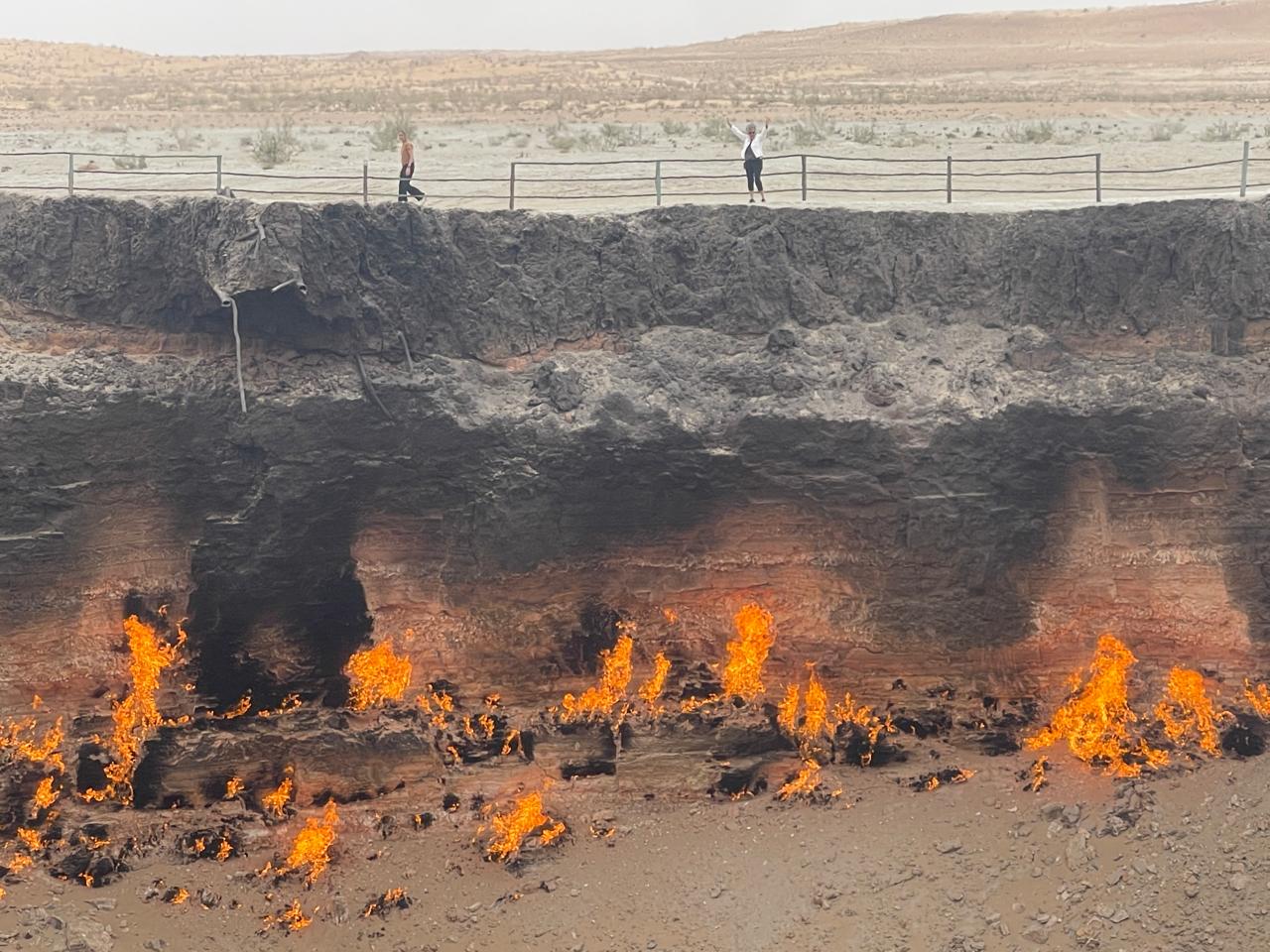
Darvaza Gas Crater (4 h) Head towards the Darvaza Gas Crater (270 km, 4-hour drive). The Darvaza gas crater also known as the Door to Hell or Gates of Hell, officially the Shining of Karakum, is a burning natural gas field collapsed into a cavern near Darvaza, Turkmenistan. Hundreds of natural gas fires illuminate the floor and rim of the crater. The crater has been burning since 1971. Drilling punctured a natural-gas cavern, the cavern’s roof collapsed, and some sources state that engineers ignited the crater to prevent poisonous gases from spreading. The crater is near the village of Darvaza in the middle of the Karakum Desert. The famed Darvaza gas crater, an iconic landmark in the Karakum Desert, is not the only natural spectacle this area has to offer. Just a stone's throw away are two more craters of similar origins, also spewing out natural gas – meet the Darvaza mud crater and the Darvaza water crater. You'll find the Darvaza mud crater perched almost conveniently close to the main highway - a mere 200-metre stroll away. The sheer cliffs of this crater proudly display layers of limestone deposits, with a diameter stretching 70 meters and a depth of around 20 metres. A further 24 km southward lies the Darvaza water crater. Much like its mud sibling, this crater is conveniently accessible from the main road – just 150 meters off the beaten track. It stretches 50 meters wide with steep walls leading to a water-filled basin 15 meters below ground level.
BBQ style dinner
Night in yurts
-
BREAKFAST BBQ
Head towards Dashoguz (6 h).
09:00 – After breakfast departure to Khiva, Uzbekistan via to Dashoguz (369 km, 6-hour drive).
Lunch (on way) (1 h) Lunch includes courses from national cuisine as a standard option (see the "Special Notes"), however, guests can order other courses at an extra charge.
Crossing «Shavat» checkpoint border (30 min) At 15:00 - Crossing «Shavat» checkpoint border, complete immigration and customs formalities and then proceed to the Khiva Our local tour guide will be waiting for you on the Uzbekistan side.
Direction to Khiva (1 h) 16:00 – Arrival at Khiva, accommodation to hotel Khiva is an ancient city, located within the Khorezm region. It has a well-preserved old town that dates back to the 10th century and is designated as a UNESCO World Heritage Site. The city is surrounded by walls and its old streets are home to unique mosques, madrassas, and mausoleums, including the Juma Mosque and the Kalta Minor minaret.
Night at the hotel
-
BREAKFAST
09:00 - Khiva sightseeing:
Ichan-Kala (40 min) Ichan-Kala, also known as the inner city, is a walled city within Khiva that dates back to the 10th century. It is home to several important landmarks, including the Pakhlavan Mahmoud Complex,
The Kunya-Ark Fortress, and the Islam Khoja Minaret and Madrasah.
Pahlavan Mahmoud Complex (30 min) The Pahlavan Mahmud Complex is a mausoleum and mosque located in Ichan Kala. Dedicated to the Sufi poet and wrestler Pahlavan Mahmud, it features intricate art and architecture.
Kunya-Ark Fortress (20 min) The Kunya-Ark Fortress is a historic palace located within Ichan-Kala that dates back to the 17th century. It was once the residence of the Khivan khans, and today, visitors can explore its courtyards and palace rooms.
Kalta Minor Minaret (20 min) The Kalta Minor Minaret is a large, blue-tiled minaret located within Ichan-Kala. It was intended to be the tallest minaret in Central Asia but was never completed due to the death of its builder.
Islam Khoja Minaret (30 min) The Islam Khoja Minaret and Madrasah is a historic Islamic school located within Ichan-Kala. Its minaret is one of the tallest in Uzbekistan and features intricate tilework and brickwork.
Tash Khauli-Khan Palace (20 min) The Tash Khauli-Khan Palace is a historic palace located within Khiva that dates back to the 19th century. It features beautiful tilework and intricate wooden carvings.
Muhammad Amin-Khan Minaret (30 min) The Muhammad Amin-Khan Minaret and Madrasah is a historic Islamic school and minaret located in the city of Khiva. It dates back to the 19th century and features beautiful tilework and intricate brickwork.
Lunch time (1 h) Lunch includes courses from national cuisine as a standard option (see the "Special Notes"), however, guests can order other courses at an extra charge.
Transfer to train station (30 min).
14:00 – Transfer to train station. Train to Samarkand (9 h)
15:14 – Train to Samarkand by train #076 (Khiva-Tashkent (9-hour).
Arriving Samarkand (30 min)
00:41 – Arriving Samarkand
Night at the hotel
-
BREAKFAST
08:00 - you will start tour:
Registan Square is a historic square in Samarkand that is surrounded by three important Islamic buildings: Ulugbek Madrasah, Sher-Dor Madrasah, and Tilla-Qori Madrasah. It dates back to the 15th century and is known for its stunning tilework and intricate architectural details.
Gur-e Amir Mausoleum (1 h 30 min) Gur-e Amir Mausoleum is a historic mausoleum located in Samarkand. It was built in the 15th century and is the final resting place of the Asian conqueror Timur and several of his descendants. The mausoleum features elaborate tilework and intricate carvings.
Lunch time (1 h) Lunch includes courses from national cuisine as a standard option (see the "Special Notes"), however, guests can order other courses at an extra charge.
Rukhabad Mausoleum (40 min) Rukhabad Mausoleum is another historic mausoleum located in Samarkand. It was built in the 14th century and contains the tomb of the Islamic scholar and philosopher Sheikh Burhanuddin Sagardji. The mausoleum features a unique domed structure and intricate tilework.
Bibi-Khanym Mosque (40 min) Bibi-Khanym Mosque is a historic mosque located in Samarkand. It was built in the 15th century and was once one of the largest mosques in the Islamic world. The mosque features intricate tilework and a large entrance portal.
Shah-i-Zinda Necropolis (40 min) Shah-i-Zinda Necropolis is a complex of historic mausoleums and tombs located in Samarkand. It dates back to the 11th century and is the final resting place of several important figures in Islamic history. The complex features unique tilework and intricate carvings.
Ulugbek Observatory (40 min) Ulugbek Observatory is an ancient observatory located in Samarkand. It was built in the 15th century by the astronomer and mathematician Ulugbek and features unique astronomical instruments and carvings.
Night at the hotel
-
BREAKFAST
Departure to Panjakent (2 h)
09:00 – After breakfast transfer to the land border with Tajikistan. Border formalities. In border, because of the long border procedure might be we will change our transport.
Panjakent is an ancient city located in the Sughd region of Tajikistan. It was an important center of the Sogdian civilization and features several important archaeological sites and museums.
Ancient Sarazm (1 h) Sarazm (5500-year-old) - the object of the World Heritage Monument in Tajikistan. This is the oldest settlement (IV—II millennium BC) located 15 km west of the district center of Penjikent, on the left bank of the Zaravshan River. Well-preserved palace and religious buildings, public and residential buildings are of great historical and cultural value.
Ancient Panjakent (40 min) Deep in the heart of Tajikistan, on the banks of the Zaravshon River, lies the ancient city of Panjakent – the pearl of Sogdiana. This unique place is where history comes alive under your feet. Every stone here holds the secrets of an ancient civilization that once flourished in Central Asia. Archaeological excavations in Penjikent have uncovered the ruins of an independent citadel, which once housed the palace of Divashtich, the last ruler of Penjikent. Panjakent was home to two temples, standing side by side in the city's main square—one dedicated to Zoroastrianism, the other to a local pagan cult. Sogdiana was not a centralized empire, but a loose confederation of principalities, often vassals of stronger powers, such as Zoroastrian Iran or the pagan nomadic khaganates.
Lunch time (1 h) Lunch includes courses from national cuisine as a standard option (see the "Special Notes"), however, guests can order other courses at an extra charge.
Head to Seven Lakes (1 h 10 min) The Seven Lakes are located in the western Fann Mountains; each has its own unique charm. We will reach the sixth of the seven lakes – Lake Morguzar, but, unfortunately, we will not be able to reach the seventh lake, as this would require a 10-kilometer hike, which will take 3-4 hours.
Seven Lakes (3 h). Seven Lakes is a series of seven alpine mountain lakes located in the Fann Mountains of Tajikistan. The lakes are known for their crystal-clear waters and stunning mountain scenery, making them popular among hikers and nature enthusiasts.
Rudaki Complex (2 h) Rudaki Complex is a museum and cultural institution located in the city of Panjakent, Tajikistan. The museum is dedicated to preserving the cultural heritage of Tajikistan and Central Asia. The museum and mausoleum was built for the founder of Persian-Tajik literature - Abuabdullo Rudaki, who, according to historical data, lived in the late IX – X centuries, during the reign of the Samanid dynasty.
Night at the hotel
-
BREAKFAST
Departure to Istaravshan (3 h).
08:00 – After breakfast departure to Istaravshan (180 km, 3-hour drive)
Istaravshan is a museum city and an ancient center of trade and crafts. It is one of the oldest cities in Central Asia, with a history dating back 2,500 years. It is known that from the sixth to the fourth centuries BC, as crafts and trade developed in settled Asian regions, large urban-type settlements emerged. One such example is Istaravshan, formerly Kyropolis (Kurushkada), named after the founder of the Persian Empire, Kira the Great (529-559 BC). By the time Alexander the Great conquered Central Asia in the 4th century BC, Kurushkada had already grown into a substantial, well-fortified city. Hazrati Shoh (30 min) The historical-architectural complex known as Hazrati-Shoh is located in the old part of the city of Istravshan. It consists of three cultural constructions: the mausoleum of Hazrati-Shoh, the mausoleum of Khudoer Valami, and the mosque of Hazrati-Shoh. Each of these constructions was erected at a different time and has a unique history of its own.. Mug Fortress (30 min), The Fortress, located on Mount Mug and along the banks of the Zeravshan river, is a site dating back to the 7-8 centuries. In 1933, an archaeological expedition unearthed a significant cache of documents: 74 in Sogdian, one in Arabic, and several in Chinese. The site also yielded a variety of household items, including silk, cotton, and woolen fabrics, as well as leather shoes and wooden utensils. Among the notable artifacts were weapons and coins, offering further insights into the historical significance of the site. Of particular interest is a wooden leather-covered shield bearing the image of a Sogdian warrior.
Lunch time (1 h), Lunch includes courses from national cuisine as a standard option (see the "Special Notes"), however, guests can order other courses at an extra charge.
Khujand (1 h 40 min) Khujand is one of the oldest cities in Central Asia. It is an important transport hub, as well as a political, economic, cultural, and scientific center of the Tajikistan. The foundation of the city was laid in the VII-VI centuries BC, and it was conquered by Alexander the Great, who rebuilt and strengthened it, naming it Alexandria Eskhata (Extreme),
Khujand Fortress (1 h). Khujand Fortress. The history of the fortress dates back to the VI-VII centuries A.D., making it a significant historical landmark. Its strategic location on the Syr Darya River at the mouth of the Ferghana Valley made it an important barrier against invasions throughout various historical periods. The fortress and the citadel, components of ancient Khujand, were surrounded by fortress walls and a deep moat filled with water. Today, the fortress serves as a museum, showcasing the history, culture, and people of Khujand and the surrounding Sughd region. Within its walls, visitors can explore historical artifacts, traditional crafts, and exhibits that offer insights into the daily lives of the people who have inhabited this area for millennia.
Jami Mosque complex (30 min). The Jami Mosque complex, a monument of folk architecture from the 16th century, is a significant landmark in the region. The mosque houses one of the largest museums of Islamic culture in Central Asia. It offers a comprehensive learning experience, providing insights into the history of Islam in the region and the cultural and religious traditions of the Tajik people. The multi-column building adjoins the eastern wall of the winter hall, which also features a multi-column design, and leads into the courtyard of the mosque.
Panjshanbe Bazar (40 min). Panjshanbe Bazar is a major tourist attraction in Khujand. The complex consists of a primary pavilion and numerous shops, tents, and adjacent structures. The architectural style of the bazaar building combines elements of classicism and Stalinist Empire style, with a harmonious execution of decorative elements inspired by both Soviet and Oriental styles. The entrance is marked by a hemispherical portal adorned with vibrant paintings, while sculptures of a man and a woman grace the exterior walls. Inside, visitors will find a long-vaulted hall with slender rows of columns.
Night at the hotel
-
BREAKFAST
Departure to Tashkent (2 h).
09:00 – After breakfast departure to Tashkent via border Fotehabad/Aybek (distance 70 km, 1.30 h) 10:30 – Cross the border Fotehabad/Oybek and transfer to Tashkent (distance 110 km, 2 h).
Lunch time (3 h 30 min).
Arriving Tashkent and have a lunch Lunch includes courses from national cuisine as a standard option (see the "Special Notes"), however, guests can order other courses at an extra charge.
Metro tour (1 h). Construction of Central Asia’s only metro system began in July 1972. Each station has its own distinctive design — decorated with marble, granite, columns, colorful bas-reliefs, and traditional ganch carvings. Lighting plays a key role: one station resembles a grand ballroom, while another evokes the mystery of underground catacombs. Each station is a work of art and a tourist attraction in itself.
Chorsu Bazaar (1 h). Chorsu Bazaar is the largest and oldest market in Tashkent. Its name means “Four Roads” in Persian, referring to its location at the crossroads of ancient trade routes. With over 2,000 years of history, the current structure dates back to 1785. The market is famous for its lively atmosphere, selling everything from fresh produce, dried fruits, nuts, and local sweets to traditional Uzbek dishes such as plov, samsa, and shashlik.
Night at the hotel
-
BREAKFAST
About 4 hours free time.
Transfer to Tashkent airport (3 h 20 min).
12:00 – Pick up from hotel and transfer to Tashkent International airport 12:30 – Check in to the flight.
Flight to Bishkek (2 h 30 min).
15:20 – Flight to Bishkek (Uzbekistan Airways, HY-777).
Transfer to the city (1 h).
17:45 – Arriving Bishkek and transfer to hotel.
Night at the hotel
-
BREAKFAST
Departure to the Issyk-Kul Lake (2 h).
09:00– After breakfast departure to the Issyk-Kul Lake, Fairytale Canyon (339 km, 6 h. drive).
Burana Tower (30 min). The Burana Tower is a historic minaret located in the Chuy Valley of Kyrgyzstan. It was built in the 11th century and is one of the few remaining structures from the ancient city of Balasagyn. The tower features unique carvings and inscriptions from the era of the Karakhanids.
Way to Issyk-Kul (3 h). Issyk-Kul is a large lake located in the northeastern part of Kyrgyzstan. It is the second-largest alpine lake in the world and is known for its crystal-clear waters and stunning mountain scenery. The lake is also home to several important historical and cultural landmarks.
Lunch on way (1 h). Lunch includes courses from national cuisine as a standard option (see the "Special Notes"), however, guests can order other courses at an extra charge.
Eagle show (optional) (1 h). On the road in close Issyk-Kul, we will visit Bokonbayev village, where we will participate eagle-hunting show. Eagle’s owner will share all his knowledge with you about eagles and hunting. He will introduce you to his own eagle and you will have an opportunity to ask him questions and take pictures with the Golden Eagle itself. It will be followed by a live Eagle Hunting Show: Flying, catching prey, and hunting (optional, at the expense of the (willing) tourists themselves).
Fairytale Canyon (50 min). The Skazka canyon (or the Fairytale canyon) is about 1,5-2 km long reddish geological formation at the south side of Issyk-kul in Kyrgyzstan. The peculiar forms of the sand stone have been slowly created by the erosion of wind and rain resulting in imaginative forms.
Tosor town (30 min).
Night at the hotel
-
BREAKFAST
Departure to Kolsai lakes (323 km, 5.3 h. drive).
Crossing Kegen border with Kazakhstan, border formalities.
Lunch on way (1 h). Lunch includes courses from national cuisine as a standard option (see the "Special Notes"), however, guests can order other courses at an extra charge.
Kaindy lake (30 min).
At 14:30 – Arrival at Kaindy lake Kaindy lake was formed as a result of the earthquake of 1911 and has a very interesting history, which our guides will definitely tell you. The water in the lake is always clear and clean. Here you can look at the lake from three points: the central part, the observation deck, and the “Gate of Desires”.
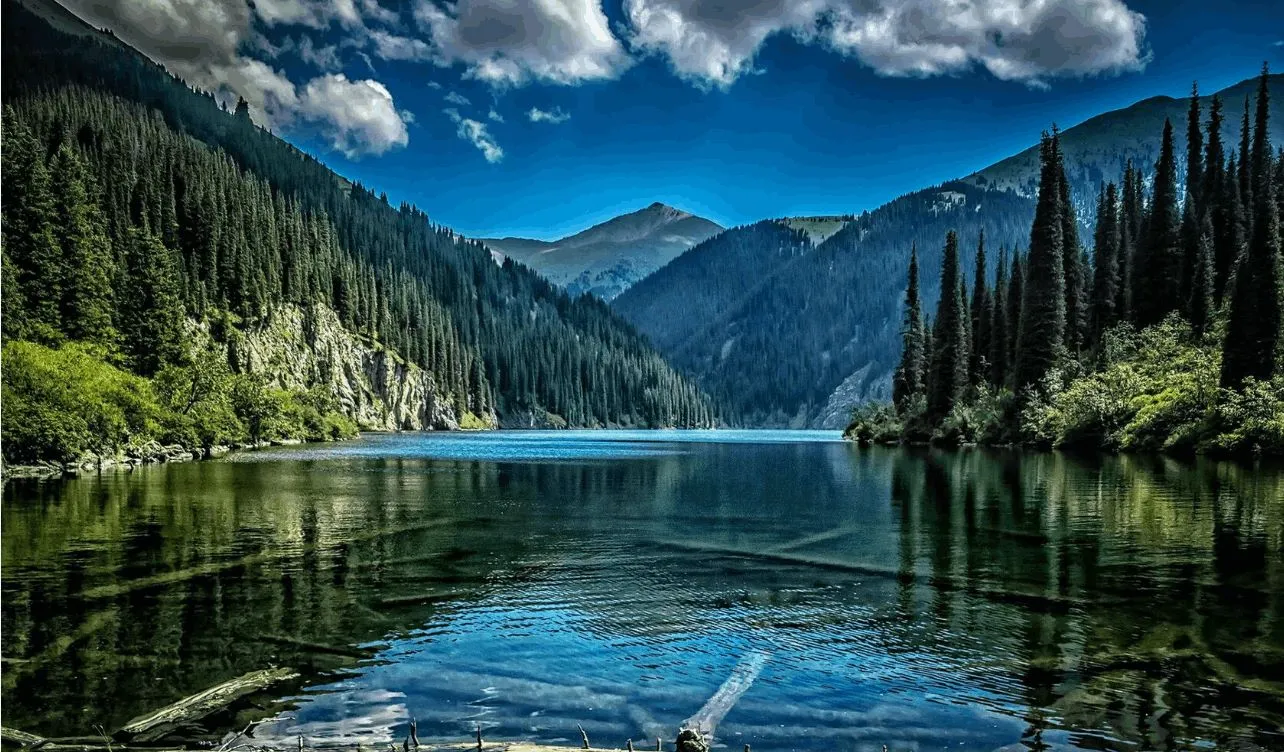
Kolsai lakes (2 h). 15:00 – Trip to Kolsai lakes via Saty village. Kolsai lakes are one of the wonders of Kazakhstan. Translated from the Kazakh language, “kolsai” means “gorge of lakes.” Three Kolsai lakes are located in the eastern part of the Kungei Alatau ridge, which is 300 km from Almaty.
Saty village (40 min).
17:00 – Return to Saty village
Night at the hotel
-
BREAKFAST
Departure Charyn Canyon (2 h). Departure to Almaty (300 km, 5 h. drive), on way visit Charyn Canyon.
Charyn Canyon (1 h). Charyn Canyon is located in the Charyn National Park about 215 km east of Almaty. The Canyon has been described as the Grand Canyon’s little brother. The Canyon itself is approximately 150 km long, and, in places up to 300 meters deep. One area of particular interest is an area of 2 km called the Valley of Castles, due to the pillars and rock formations forming imposing, almost man-made structures.
Lunch time (1 h). Lunch includes courses from national cuisine as a standard option (see the "Special Notes"), however, guests can order other courses at an extra charge.
Trip to Almaty (3 h 30 min).
17:00 – Arrival at Almaty .
Night at the hotel
-
Breakfast at the hotel Free time At any required time of the day transfer to the International airport of Almaty.
We hope you enjoyed our service and hope you'll come back again.
Included
- Transfer from/to airport/hotel (pick up / drop off);
- Private transportation during the tour;
- Accommodation (from hotel-1* up to hotel 4* ), STD, B&B, TWN;
- Meals, lunch, STD , breakfast at hotels;
- Guide, English speaking;
- Entrance fees to the visiting sites;
- Economy train tickets (Tashkent-Bukhara), (Bukhara-Samarkand);
- Economy air ticket (Mary-Ashgabat)
- Dinner and breakfast at Darvaza
- Sightseeing tours;
- Tourist tax (in Tajikistan);
- Tourist tax (in Turkmenistan);
- Visa support, if required .
Excluded
- International air tickets (Almaty to Tashkent ( $90), Tashkent to Bishkek ( $110))
- Turkmenistan visa fee 80-100 $, Migration tax 14$, PCR nose test 33$
- Meals, dinner (own);
- Alcohol drinks;
- Other personal expenses.
Customer Support
We have a professional customer support team and always accompany you on every trip.