

TAJIKISTAN
TAJIKISTAN
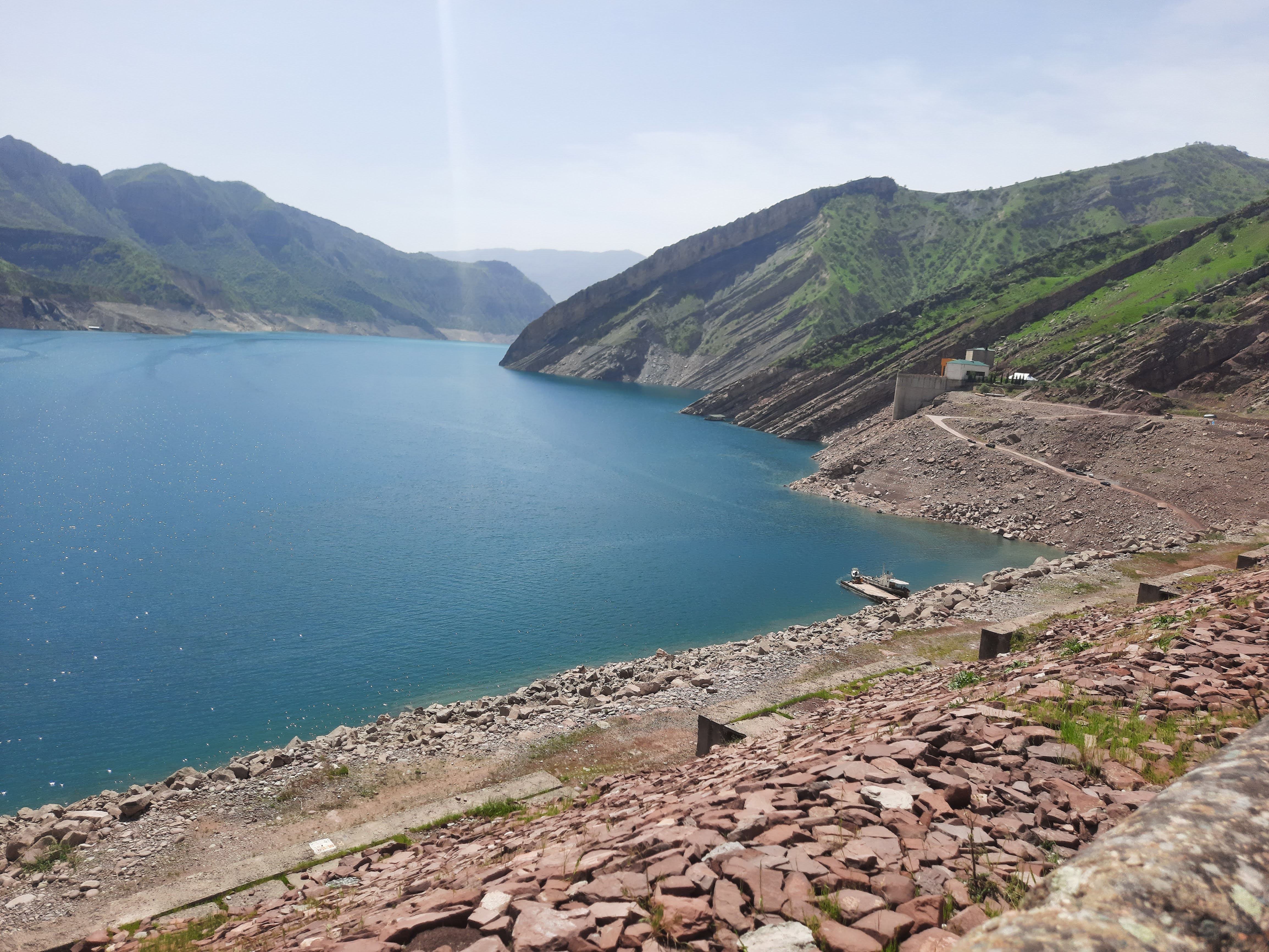
Tajikistan is the perfect travel destination for anyone in search of a unique, adventurous, unforgettable holiday. Home to the majestic Pamir Highway and some of the most exquisite mountains in the world, backpackers, hikers, cyclists and nature enthusiasts alike will be drawn to its remote and well-preserved environ. A meshing of past and present, a venture to this lesser-known land leaves many with the impression that they have not just traveled the globe, but stepped back in time. A tapestry of color and tradition, time spent in Tajikistan will expand your horizons and enrich your worldview.
Though the country is still developing and continues to improve its services to tourists, opportunities abound for every type of travel: whether community-based tourism or cross-country trekking, cultural immersion or historical awareness, independent tourism or guided travel to Tajikistan, as long as you’re ready to experience the unknown and step out of your comfort zone, you won’t be disappointed in Tajikistan!
DUSHANBE
Dushanbe is the capital and largest city in Tajikistan. Its name means "Monday" in Persian language, having been built on the site of a Monday market. It was a small village for centuries; however, after the Bolshevik revolution and Red Army conquest of Central Asia, it was made the capital of the new Tajik Autonomous Soviet Socialist Republic (later the Tajik Soviet Socialist Republic). Under the Soviets, Dushanbe grew rapidly, and was endowed with many industrial enterprises and cultural institutions. The city was peaceful and prosperous, and had a very multi-ethnic population due to an influx of workers, mostly Russian-speaking, from other parts of the Soviet Union, reaching 850,000 today. During the 1990's, Dushanbe became very dilapidated, and its people impoverished, due to the collapse of the Soviet command economy and the Tajik civil war of 1992-1997; most Russians and other minorities fled during this time.
However, during the past decade the city has seen a virtual renaissance and is now more prosperous and beautiful than ever. The infrastructure has been mostly rebuilt; streets are newly paved and orderly, and electricity, water and gas supplies are uninterrupted. Gleaming new hotels and banks are a common sight, as are internet cafes, well-stocked supermarkets, and modern apartment buildings. Nearly every type of International cuisine can be found in the center, from inexpensive and authentic Uzbek and Central Asian dishes to the finest European, Asian, and American offerings. Modern Dushanbe is a true "garden city", its wide boulevards and sleepy backstreets lined with towering plantain and poplar trees, giving the city the feel of a leafy oasis on hot summer days. Many large parks are scattered throughout the city, watered by a network of large and small canals and channels.
Hotel accommodations from one to five stars are available, ranging from quiet guesthouses in vintage buildings to cosmopolitan business hotels, including international chains such as Radisson and Hyatt.
ISTARAVSHAN
Istaravshan, Tajikistan is one of the oldest cities in the world, having celebrated its 2500th birthday in 2002. This town of 65,000 inhabitants, strategically located on the road between Dushanbe and regional capital Khujand, has witnessed the rise and fall of countless rulers and empires who have all played a hand in shaping Istaravshan into the resilient, traditional city that it is today.
Nestled in northern Tajikistan near the foothills of the Turkestan Mountain Range, the city is elevated nearly 1000 meters above sea level. The climate is mild, with snowy winters and dry, cool summers. Istaravshan borders Uzbekistan in the north and west, the Gancha district in the east, Kyrgyzstan in the southeast, and the Ayni District of Tajikistan in the south.
The city was first established between the 6th-5th centuries BC by the Persian King Cyrus. Originally called Kiropol, a derivation of ‘Cyrus’, Kiropol owes its origins, in part, to the growth of craft production and trade in the region. By the time Alexander the Great conquered Central Asia in the 4th century BC, Kiropol was already a large, well-fortified city, and it was near the city walls of Kiropol that Alexander the Great was wounded for the first time.
KHUJAND
Khujand, also transliterated as Khudzhand, Khujand or Khojand, was known until 1939 as Khujend; until 1992 as Leninabad (Leninobod), is the second largest city of Tajikistan. It is situated on both sides of the Syr Darya River at the mouth of the Fergana Valley. The population of the city is about 150,000, down from 160,000 in 1989. It is also the capital of the northernmost province of Tajikistan, now called Sughd. It sits at a strategic location at the narrow western end of the Fergana Valley, almost totally surrounded by Uzbekistan. It is connected to Tajikistan proper via the Khudzhand-Dushanbe highway, currently a precarious, high altitude mountain route which is closed in winter; a complete reconstruction of the route, as well as several new tunnels (by Chinese companies) is nearing completion as of 2009.
PENJIKENT
Penjikent (also called panjakent) is a modern city in the extreme northwest of Tajikistan, located in a broad valley at the base of the Fann Mountains near the border with Uzbekistan. It is also the site of an ancient citadel, among the oldest in Central Asia, the ruins of which are located on a high plateau above the current city. The area has always been important as a result of its strategic location along the Zarafshan River Valley. With a population of around 35,000, it is a regional center for trade and transportation; the main route between the major centers of Uzbekistan and Tajikistan runs through the center. Most local residents are involved in agriculture and trade, and the lowlands on which Penjikent is settled is a very fertile agricultural area, in which grapes, cotton and various vegetables are grown. Being close to Samarkand (across the border), the Fann Mountains and the Fergana Valley, it is one of the most visited areas in the country by foreigners, and an ideal base for trekking and climbing in the region. From anywhere in the city one can see stunning views of the picture perfect peaks of the Pamir-Alay range to the south and east. The colorful bazaar and ruins of the ancient city are the main attractions in town; nearby are the famous "seven lakes"; picturesque Mazar-i-Sharif village, with the mausoleums of Islamic scholars Muhammad Bashoro; and Panjrud village, hometown of famed Islamic poet and National hero Rudaki (9th -10th centuries A.D.).
SEVEN LAKES
If the Fann Mountains are Tajikistan’s crowning beauty, Seven Lakes are the diamond necklace adorning their snowy cliffs. Also known as Haftkul and Marguzor Lakes, this collection of sparkling beauties in the winding Shing River Valley captivates all who are fortunate enough to set eyes on them. Known for their amazing blue waters and surrounding mountain scenery, exquisite particularly in summertime, Seven Lakes has remained one of Tajikistan’s best-kept secrets, receiving relatively few visitors each year.
MURGHAB
Murghab is a small mountain town (pop. 4000) on the Murghab Plateau in eastern Tajikistan (Gorno-Badakhshan Autonomous Oblast). It lies at the junction of the Pamir Highway, which runs through the center of town and links the province with Kyrgyzstan and Afghanistan, and the main road linking Tajikistan with China over the Qulma Pass. For this reason it was built during Soviet times as arrest stop, and is an important transportation hub as well as the biggest town in the eastern half of GBAO. The majority of its inhabitants are ethnic Kyrgyz, though they live in dwellings more typical of Tajiks. Lately, it has become an important tourist base, and is one of the few places in Tajikistan which has tourist facilities, including a Community Based Tourism network.
.jpg)